

When to Start Deck Staining After Pressure Washing
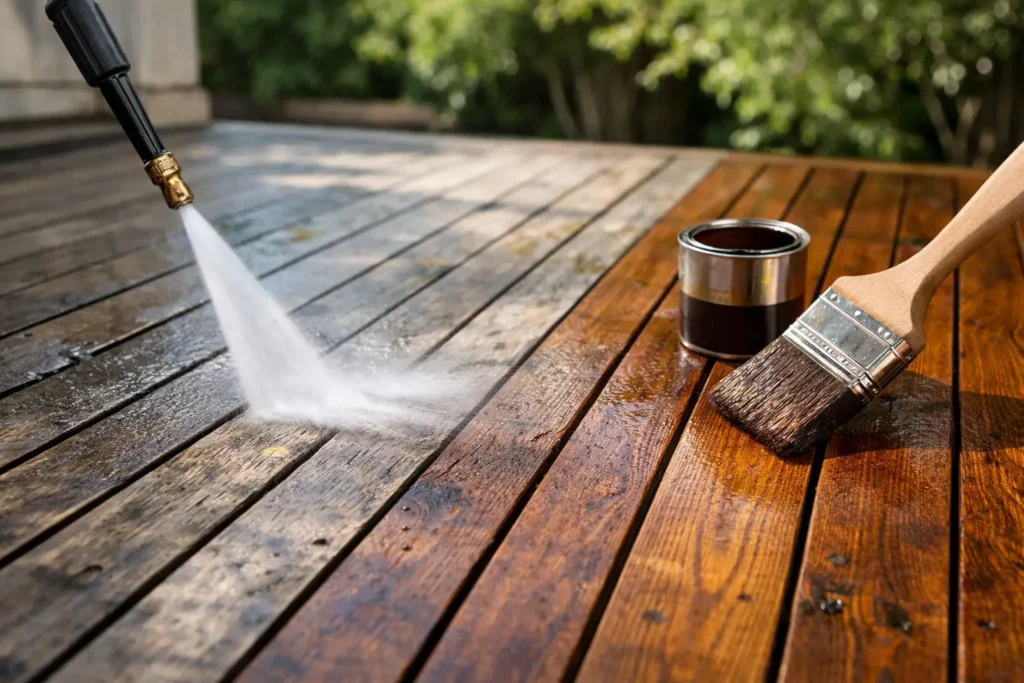
A freshly pressure-washed deck can look ready for stain the same day. In the South Puget Sound area, that appearance can be misleading. Deck staining after pressure washing should begin only after the wood has dried thoroughly, the weather is working in your favor, and the surface has been checked for raised grain, damage, and remaining contaminants. Rushing this step can trap moisture beneath the finish, leading to blotchy color, peeling, premature wear, and wood that stays vulnerable to rain.
Why Drying Time Matters After Pressure Washing
Pressure washing removes dirt, mildew, loose old stain, and surface grime that can keep a new coating from bonding. It also drives water into the wood. That is especially true with older boards, softwood decks, cracked boards, and decks that have gone without a protective finish for years.
Stain needs dry, receptive wood fibers to penetrate or bond correctly. When moisture remains in the boards, the stain may sit closer to the surface instead of soaking in as intended. It can dry unevenly, look darker in some areas, or fail much sooner than it should.
Western Washington weather makes the drying question more complicated. A deck in Puyallup, Tacoma, Graham, Gig Harbor, or nearby communities may receive morning dew, shade from trees, cool temperatures, and intermittent rain even during a generally dry stretch. The calendar does not determine whether a deck is ready. The condition of the wood does.
How Long to Wait for Deck Staining After Pressure Washing
In warm, dry, breezy weather, many decks need at least 24 to 48 hours after pressure washing before staining. That is a starting point, not a guarantee. A deck may need 48 to 72 hours or longer when it is shaded, surrounded by vegetation, built low to the ground, made from older wood, or exposed to damp conditions.
If rain arrives after washing, the drying period effectively starts over. A few hours of direct sun after a rainy day may dry the top of the boards, but moisture can still remain below the surface. Applying stain at that point is a common reason a finish fails early.
Check moisture instead of relying on a schedule
A wood moisture meter gives the clearest answer. For many exterior stains, wood should generally be at or below about 15 percent moisture content, though the stain manufacturer’s instructions should always guide the final decision. Testing several locations matters because a sunny edge of the deck can be much drier than boards near the house, under a railing, or beside landscaping.
Without a moisture meter, look for practical clues: the boards should feel dry rather than cool and damp, gaps between boards should be visible, and no dark wet-looking patches should remain. These checks help, but they are not as dependable as measuring the wood. On a sizable deck or a property where long-term protection matters, testing moisture is worth the extra care.
Inspect the Wood Before Applying Stain
Pressure washing is preparation, not the entire preparation process. It often reveals problems that dirt and old finish had been hiding. Before staining, inspect the deck for splitting, loose fasteners, popped nails, rotted sections, soft spots, and boards that have begun to cup or warp.
Pay close attention to the tops of railings, stair treads, joist ends, and boards closest to planters or downspouts. These areas receive more water and usually show deterioration first. Stain can improve the appearance of worn wood, but it cannot restore structural strength or stop rot that is already active.
Pressure washing can also raise the wood grain, particularly on cedar and softer decking materials. If the surface feels rough or has small fibers standing up, allow the wood to dry fully and sand it smooth before staining. Sanding creates a more comfortable walking surface and helps the finished deck look more even. Remove sanding dust completely before applying any product.
Choose a Stain That Fits the Deck and Its Exposure
The right stain depends on the wood species, its age, the current condition of the deck, and how much sun and moisture it receives. Transparent stains show the most wood grain but offer less UV protection and usually require more frequent maintenance. Semi-transparent stains provide richer color and more protection while still allowing some grain to show. Solid-color stains cover more of the wood’s natural variation and can be a good option for older, heavily weathered decking.
There is a trade-off. The more hiding power a stain has, the more it can disguise uneven color and weathering. At the same time, a solid coating can be less forgiving if the wood is damp, poorly prepared, or beginning to peel from an older finish.
Oil-based and water-based products each have a place. Oil-based stains often penetrate well and can be a practical choice for dry, weathered wood. Water-based stains can offer good color retention and easier cleanup, but they still require clean, dry boards and careful application. The best choice is not always the product with the longest label claim. It is the one that matches the deck’s condition and can be applied in the available weather window.
Apply Stain in the Right Weather Window
Once the wood is dry and prepared, watch the forecast closely. Avoid staining if rain is expected before the product has time to cure. Do not apply stain to hot boards in direct afternoon sun, either. Fast drying can leave lap marks, uneven penetration, and a patchy finish.
A mild, dry day is usually best. Start with the areas that will lose shade or gain direct sun first, and maintain a wet edge so the color blends consistently from board to board. Apply stain in thin, even coats. More product does not mean more protection. Heavy application can leave shiny spots, sticky areas, and a finish that does not cure properly.
Use a brush to work stain into board ends, cracks, railings, and other detailed areas. A pad or roller can help cover large deck surfaces efficiently, but back-brushing helps distribute the product evenly and prevents puddling. Wipe up excess stain rather than allowing it to sit on the surface.
Keep foot traffic, furniture, grills, rugs, and planters off the deck until the stain has cured according to the product directions. A deck may feel dry to the touch long before it is ready for regular use.
Common Mistakes That Shorten a Deck Finish
The most common mistake is staining too soon after pressure washing. Another is using excessive washing pressure, which can scar the boards and leave the wood fuzzy. A deck should be cleaned with enough pressure to remove contamination without damaging the surface.
Homeowners also run into trouble when they stain over loose old finish, skip sanding after raised grain, or use the same product across repaired boards and weathered boards without testing the color. New wood, old wood, and wood filler can absorb stain differently. A small test area can prevent an unpleasant surprise across the whole deck.
Finally, do not overlook drainage. If water pools on the deck or splashes repeatedly against a railing and stair stringer, even a quality stain will have a shorter service life. Correcting drainage issues and keeping debris out of board gaps helps the wood dry between rains.
When Professional Preparation Makes Sense
A deck with peeling stain, widespread mildew, soft boards, visible rot, or uneven previous coatings may need more than a wash and a fresh coat. Proper wood repair, controlled cleaning, sanding, and product selection can make the difference between a finish that lasts and one that needs attention again next season.
K&D Quality Painting helps South Puget Sound property owners evaluate the condition of their decks before staining begins. With more than 30 years of painting and wood-finishing experience, our team focuses on preparation and protection, not simply changing the color of the boards.
Your deck is exposed to every wet season, sunny afternoon, and temperature change Western Washington delivers. Give the wood enough drying time, choose a finish suited to its condition, and address problems before they are covered. That careful approach protects the deck you already have and helps it remain a place you want to use.