
Best Stain for Wet Climate Exterior Wood
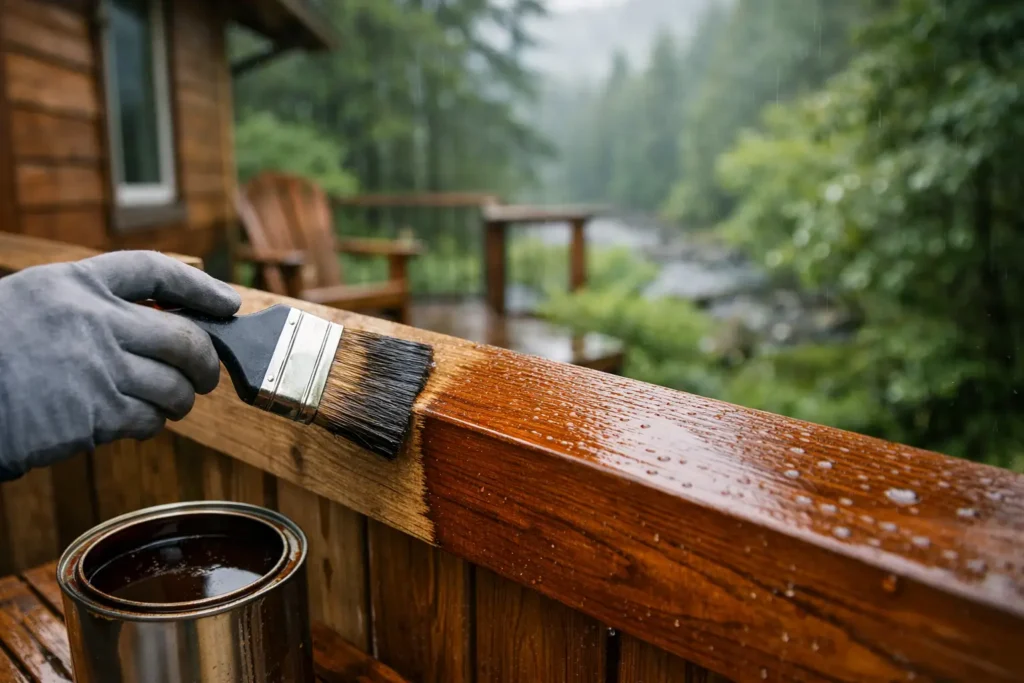
A deck can look dry on the surface and still hold moisture where it matters most: between boards, around fasteners, and inside exposed end grain. That is why choosing the best stain for wet climate conditions is less about finding the darkest color or the lowest price and more about selecting a coating system that fits the wood, the exposure, and the weather it faces.
In Pierce County and throughout the South Puget Sound area, exterior wood deals with frequent rain, damp mornings, shade, mildew, and occasional strong summer UV. A good stain helps water shed from the surface, slows moisture absorption, and protects the wood without trapping water underneath. The right choice can make a deck, fence, or porch easier to maintain and help it last longer.
What Makes the Best Stain for a Wet Climate?
For wet conditions, a stain needs more than water resistance. It also needs to handle repeated wet-and-dry cycles without peeling, blistering, or allowing mildew to take over. Wood expands as it absorbs moisture and contracts as it dries. A coating that is too rigid, or one applied over damp or poorly prepared wood, can fail early.
The best stain for wet climate exterior wood usually has four qualities: it repels water, allows the wood to release moisture vapor, includes mildewcide, and provides enough UV protection for the amount of sun the surface receives. No single product is right for every property. A covered porch in Tacoma has different needs than a south-facing deck in Puyallup or a shaded cedar fence in Gig Harbor.
A stain also needs to match the condition of the wood. New cedar, weathered pressure-treated lumber, previously stained boards, and wood with old peeling solid stain each require a different preparation and coating approach.
Choose the Right Level of Coverage
Stains are generally grouped by how much of the wood grain they show. The more opaque the stain, the more pigment it contains. That pigment is what provides UV protection, but increased coverage can also mean a more paint-like finish.
Transparent and Clear Water Repellents
Clear water repellents show the natural wood completely. They can help reduce water absorption, but they offer very limited UV protection. On a sunny deck or fence, clear products often weather quickly and may need frequent renewal.
They can make sense for covered wood with little direct sun, or for homeowners who accept a more frequent maintenance schedule. They are not usually the longest-lasting answer for exposed exterior wood in Western Washington.
Semi-Transparent Stain
Semi-transparent stain is often a practical choice for newer or well-maintained cedar, redwood, and pressure-treated wood. It allows the grain and character of the boards to remain visible while adding pigment for better sun protection.
For many decks and fences, this is the best balance between appearance and maintenance. Because it penetrates rather than forming a thick surface film, quality semi-transparent stain is less likely to peel than a coating that sits heavily on top of the wood. However, it will not hide dark stains, old color variations, repairs, or wood that has grayed unevenly.
Semi-Solid and Solid Stain
Semi-solid stain provides more color coverage while still retaining some texture from the wood. It is useful when boards have noticeable color differences but are still in generally good condition.
Solid stain gives the most UV protection and does the best job hiding discoloration, previous repairs, and uneven wood tone. It is often a smart option for older decks, fences, and porches that need a uniform finish. The trade-off is that solid stain behaves more like paint. If preparation is skipped or moisture is trapped in the wood, it can crack or peel and will require more thorough maintenance later.
Oil-Based vs. Water-Based Stain in Rainy Areas
Both oil-based and water-based stains can perform well in a wet climate when the surface is prepared correctly. The decision should be based on the wood, the existing coating, drying conditions, and the result you want.
Oil-based penetrating stains are valued for soaking into wood and enhancing natural grain. They can be especially effective on older, dry wood that needs conditioning and water resistance. Their drawback is that drying time can be longer, and application conditions matter. Applying stain before rain, over damp boards, or during a stretch of cool, humid weather can lead to uneven absorption and poor performance.
Water-based stains generally dry faster, hold color well, and are easier to clean up. Many modern water-based exterior stains are formulated to resist mildew and provide strong UV protection. They can be an excellent choice, particularly when a project has a limited weather window. Still, fast drying does not mean the wood can be wet. The surface must be properly dry before staining.
The product label matters, but it is not a substitute for evaluating the project. A quality stain applied to damp, dirty, or failing wood will not deliver quality results.
Preparation Is the Real Moisture Defense
The stain is only one part of protecting exterior wood. Proper preparation determines whether it bonds and performs as intended.
First, the wood should be cleaned of dirt, pollen, mildew, algae, and loose coating. Pressure washing can be useful, but excessive pressure can damage soft wood fibers and leave a fuzzy surface that does not accept stain evenly. The goal is to clean the wood, not carve it.
After cleaning, the wood needs adequate drying time. In the South Puget Sound area, that can take longer than homeowners expect, especially on shaded decks or fences near landscaping. A professional moisture reading is often more reliable than judging by appearance alone.
Loose stain should be removed, rough areas sanded, and damaged boards repaired or replaced before a new finish goes on. Pay close attention to horizontal surfaces, rail tops, stair treads, post caps, and cut ends. These areas absorb water faster and often show the first signs of stain failure.
Match the Stain to Sun, Shade, and Use
A deck in full afternoon sun needs more UV protection than a covered porch. A fence surrounded by trees may stay damp longer and need stronger mildew resistance. High-traffic deck boards need a finish that can stand up to foot traffic, furniture movement, and regular cleaning.
This is why the best stain for a wet climate is not always the same product from one side of a property to the other. A semi-transparent stain may be ideal for a well-kept cedar fence, while a solid stain may be the better long-term choice for an older deck with repairs and uneven boards.
Color also affects upkeep. Very dark colors can show wear and fade more noticeably in sun. Very light colors may show dirt, algae, and foot traffic. A mid-tone color often gives homeowners a practical balance between curb appeal and maintenance.
Avoid the Mistakes That Cause Early Failure
Most stain problems begin before the first coat is applied. Staining too soon after pressure washing, applying over mildew, using an incompatible product over an old coating, or coating wood just before rain can shorten the life of the finish.
Applying too much stain can also create trouble. Penetrating stains should be worked into the wood and any excess should be addressed according to the product directions. Heavy application does not necessarily provide more protection. It can leave a sticky surface, create uneven sheen, or prevent proper curing.
Do not overlook wood rot. Stain can improve appearance and protect sound wood, but it cannot repair soft, decayed boards. If wood is spongy, splitting badly, or deteriorating around posts and rail connections, repair should come before finishing.
Plan for Maintenance, Not a Permanent Finish
Even the best exterior stain will need maintenance. Rain, sun, standing water, leaf debris, and normal foot traffic gradually wear down protection. A simple annual inspection can catch problems early: look for water that no longer beads on the surface, faded areas, dark mildew spots, peeling edges, or boards that remain wet for long periods.
Keeping the surface clear of leaves, pots, rugs, and furniture that trap moisture will help stain last longer. Cleaning away algae and grime before they become embedded also protects the finish and reduces slippery conditions on decks and steps.
For homeowners who want a clear recommendation instead of a guess, K&D Quality Painting can assess the wood condition, existing finish, needed repairs, and exposure before recommending a stain system. The goal is not just a fresh color. It is exterior wood that looks cared for and is better prepared for the next stretch of Washington rain.