

Porch Wood Rot Repair That Lasts Through Rain
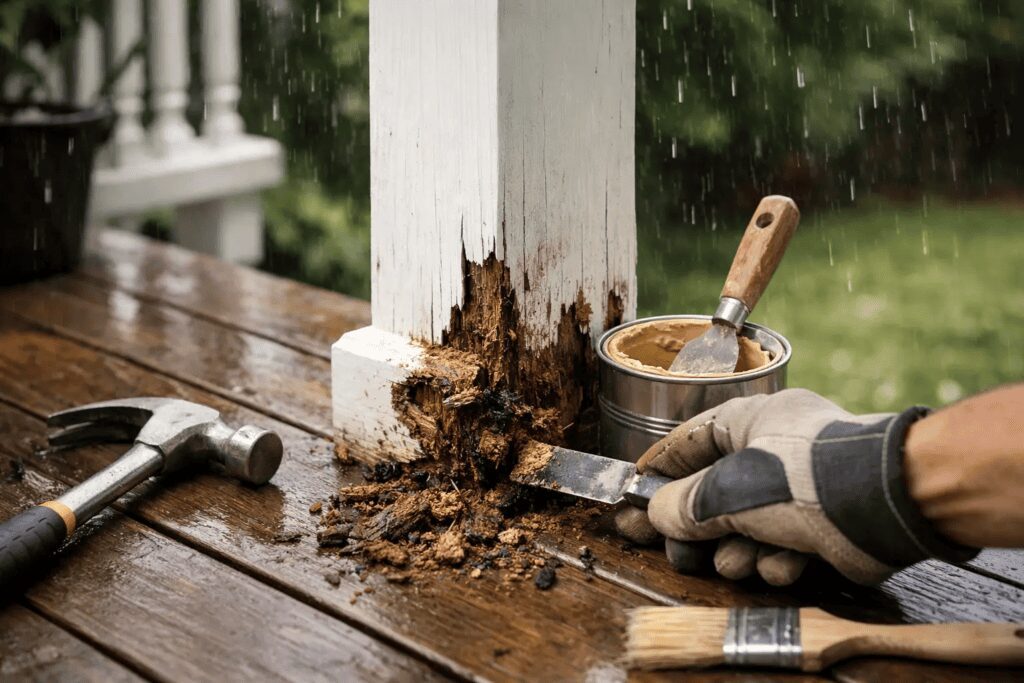
A porch can look solid from the sidewalk while moisture is quietly softening the boards beneath your feet. In South Puget Sound, porch wood rot repair is often needed long before a board collapses. Frequent rain, shaded areas, wet leaves, failed paint, and water trapped at joints can turn a small maintenance issue into damaged trim, railings, posts, decking, and framing.
The right repair is not simply a matter of filling a soft spot and applying fresh paint. Lasting results begin with finding where water is entering, removing every section of unsound wood, and rebuilding the surface so it can shed water and hold a protective coating. That preparation is what keeps a repaired porch looking good and performing well through Washington weather.
What Wood Rot Looks Like on a Porch
Rot does not always appear as a large, obvious hole. It often starts at the bottom ends of porch posts, where railings meet posts, along deck boards near the house, behind loose trim, and at joints where old caulk has split. Paint may bubble, crack, or peel because moisture is pushing from behind it. Dark staining, spongy wood, crumbly fibers, and boards that give under light pressure are all warning signs.
A simple screwdriver test can reveal trouble. Press gently into a suspect area, especially at seams and end grain. Sound wood resists the tool. Decayed wood feels soft, flakes apart, or allows the screwdriver to sink in easily. Do not assume the visible area is the full extent of the damage. Water can travel behind paint and trim, so the affected section may be larger than it first appears.
Mildew and surface discoloration are not automatically rot. They may only indicate that the porch needs cleaning and a new finish. The difference matters because a coating can protect sound wood, but it cannot restore wood that has lost its strength.
Why Porch Wood Rot Repair Needs More Than Paint
Paint is a protective layer, not a structural repair. If damaged material remains in place, fresh paint may make the porch look better for a season while rot continues underneath. The same is true of applying caulk over a wide open joint without addressing why the joint opened in the first place.
Water management is usually the real issue. A porch may have a leaking gutter, a roof edge that dumps water onto a railing, inadequate flashing where the porch meets the home, boards installed with poor drainage gaps, or landscaping that keeps the area damp. In some cases, a post bottom sits directly on a wet surface and wicks moisture upward.
Before repair work begins, the moisture source should be addressed. This may involve cleaning gutters, correcting drainage, sealing appropriate gaps, repairing flashing, or adjusting areas where soil, mulch, or debris stays against the wood. Wood needs a way to dry after rain. A repair that ignores that fact is likely to fail early.
The Right Scope for Porch Wood Rot Repair
The right solution depends on where the decay is located and whether the damaged wood carries weight. Small areas of shallow surface damage on nonstructural trim can sometimes be stabilized with an appropriate wood repair material after all soft fibers are removed. This approach can be practical for minor, isolated defects when the surrounding wood is solid and dry.
Replacement is the better choice when rot extends through a board, affects a railing connection, reaches the bottom of a post, or involves porch framing. Replacing the full damaged section provides a sound surface for fastening, caulking, priming, and painting. It also avoids creating a patch that looks acceptable but has weak material underneath.
Structural conditions deserve special attention. A loose railing, a sagging porch floor, a post with decay near its base, or soft wood around the ledger where a porch attaches to the house can create a safety concern. These situations should be evaluated before cosmetic work begins. A contractor may need to remove trim or decking to see the full condition of the framing.
How a Professional Repair Is Completed
A dependable repair follows a sequence. Skipping steps usually means the new coating will not have a stable, dry surface to protect.
Locate the moisture path
The first step is inspecting the porch beyond the damaged board. Gutters, downspouts, rooflines, handrail joints, flashing, caulked seams, and the grade around the porch all affect how water moves. The goal is to correct the cause, not just cover the result.
Remove failed material
All rotted wood is cut out or removed back to clean, firm material. For trim, that may mean replacing a section or an entire run so joints land in sensible locations. For decking, stair treads, rail components, or posts, replacement materials must fit securely and maintain the porch’s original function and safe clearances.
Prepare joints and exposed wood
New wood needs to be installed with water in mind. End cuts, seams, and connections are especially vulnerable. Proper gaps, suitable exterior fasteners, and correctly placed caulk help keep water from sitting where it does not belong. Caulk is useful at joints designed to be sealed, but it should not block drainage paths or trap water against the wood.
Prime before painting
Bare exterior wood should receive a quality exterior primer suited to the material and coating system. Primer helps seal the surface, improve adhesion, and create a consistent base for paint. End grain deserves particular attention because it absorbs moisture quickly. Once primer is properly dry, exterior paint can be applied in the recommended number of coats.
If the porch is intended to have a stained finish, the repair plan changes. Matching older stained wood can be difficult, particularly when sun and weather have changed the color over time. A solid-color stain may provide a more uniform result on heavily weathered surfaces, while a transparent or semi-transparent stain works best when the wood is sound and its natural grain is worth showing.
Choosing Materials That Hold Up in Pierce County
No single product is right for every porch. The best replacement material depends on its location, expected foot traffic, exposure to rain, and the desired finish. Wood remains a natural choice for many porch components because it can be shaped, repaired, and finished to match an existing home. It does, however, require ongoing protection.
For ground-adjacent areas and components exposed to frequent moisture, pressure-treated lumber may be appropriate. It must dry sufficiently before many coatings are applied. For trim and other detail work, rot-resistant wood or manufactured exterior trim may offer better durability in the right application. Manufactured materials have their own installation and painting requirements, so they should not be treated exactly like traditional lumber.
The lowest-cost patch is not always the lowest-cost repair. Replacing only a visibly damaged face board may be reasonable when the surrounding structure is dry and solid. But when water has reached the framing behind it, a larger repair now can prevent repeated painting, recurring decay, and more expensive work later.
When to Call for Help Instead of Patching It
Homeowners can handle routine cleaning, keeping leaves off the porch, and touching up small areas of sound painted wood. Porch wood rot repair becomes a better professional job when damage is widespread, the source of moisture is unclear, or the affected area includes stairs, railings, support posts, or framing.
Call for an assessment if you notice movement in a handrail, soft spots near the house, cracked or separating trim, recurring peeling paint in the same location, or staining that returns after every wet season. These signs often point to a condition behind the visible surface. A careful inspection can define whether the job is limited to trim replacement and painting or requires more extensive exterior repair.
Protect the Repair After the Work Is Done
A repaired porch needs regular attention, especially on shaded sides of the home. Keep gutters and downspouts clear. Sweep away wet leaves, pine needles, and soil that hold moisture against boards. Look over caulk lines and paint each spring and fall, then address small cracks before water reaches bare wood.
Do not pressure wash aggressively at close range. High pressure can force water behind trim, damage wood fibers, and strip paint from vulnerable edges. A controlled cleaning method is safer for most painted porch surfaces, followed by adequate drying time before any touch-up coating is applied.
A well-executed repair protects more than curb appeal. It helps preserve the porch as a safe, welcoming part of the property and gives new paint or stain a surface it can actually defend. If your porch shows soft wood, peeling paint, or signs of recurring moisture, K&D Quality Painting can assess the condition and provide a free estimate for repair and protective finishing work.