

Exterior Painting for Rainy Weather Explained
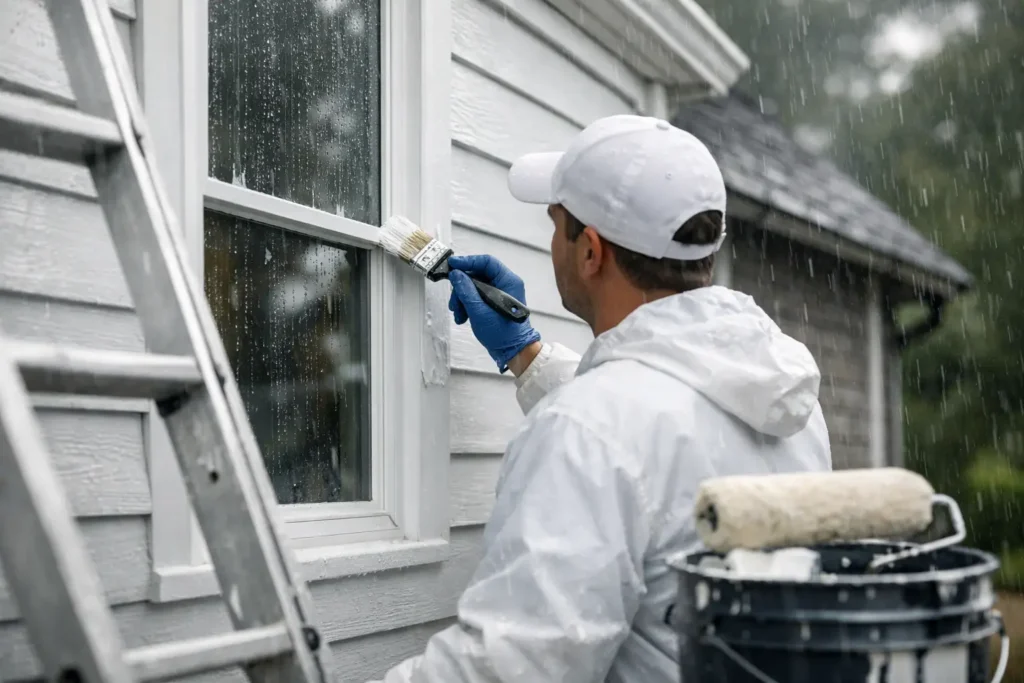
A clear morning after several days of rain can make exterior painting for rainy weather look like a simple scheduling problem. In Pierce County, it is more complicated than checking whether rain is falling at the moment. Siding, trim, caulk joints, and exposed wood can hold moisture long after the driveway looks dry. Applying paint too soon can lead to peeling, blistering, poor adhesion, and wood damage that stays hidden behind a fresh coat.
For homeowners and commercial property owners in the South Puget Sound area, the right approach is not to wait endlessly for perfect summer weather. It is to evaluate the surface, the forecast, the temperature, humidity, and the specific coating being used. A professional painting schedule should protect the property first and keep the project moving when conditions truly allow it.
Why Rain Affects Exterior Paint So Much
Exterior paint needs time to form a solid bond with the surface and cure into a protective film. Rain can interrupt that process in two different ways. The obvious problem is rainfall landing on wet paint. The less obvious problem is painting a surface that has already absorbed moisture.
Wood siding, window trim, fascia boards, fences, and decks are especially vulnerable. When wood is wet, it can expand. If paint is applied before the wood has dried, the material may later shrink as moisture leaves. That movement can break the paint bond, create cracks, or cause the finish to lift from the surface.
Even masonry, fiber-cement siding, and previously painted surfaces need to be dry before coating. Moisture trapped beneath paint may push outward as temperatures change, creating bubbles or peeling that can appear weeks or months after the job is complete. A paint job may look good on the day it is finished and still fail early if preparation and drying time were skipped.
A Dry Forecast Is Not the Same as a Dry Surface
A weather app may show no rain for the afternoon, but that does not mean the exterior is ready for paint. In western Washington, overnight rain, morning fog, shaded walls, and damp air can extend drying time significantly. North-facing elevations, areas under trees, and sections close to landscaping often dry more slowly than sunny, open walls.
Professional painters check the surface itself, not just the forecast. A moisture meter is often the most reliable way to evaluate exposed wood. The acceptable moisture level depends on the material and coating manufacturer, but wood generally needs to be sufficiently dry before primer or paint is applied. If the surface still holds too much moisture, waiting is less expensive than repainting failed work later.
Dew is another concern. A wall can be dry at noon but become damp again in the evening as the temperature drops. That is why a crew may stop painting earlier than a homeowner expects. The goal is to give the coating enough dry time before nighttime moisture arrives.
Humidity and Temperature Matter Too
Rain is not the only weather condition that affects paint. High humidity slows evaporation, which slows drying and curing. Some modern exterior coatings are designed to perform in a wider range of conditions, but every product has manufacturer requirements for temperature, humidity, and expected rain exposure.
Cool temperatures can also create problems. Paint may stay wet longer, attract dirt or insects, and fail to level properly. On the other hand, direct hot sun can cause paint to dry too quickly on the surface, making it harder to maintain an even finish. The best painting window is often a stretch of moderate temperatures, manageable humidity, dry surfaces, and enough time before rain or dew returns.
When Exterior Painting Can Move Forward
Exterior work can often proceed between rain events when the surface has dried fully and the coating has enough time to set before the next moisture arrives. This is where experience makes a difference. The right decision is based on the surface condition, exposure, product specifications, and the length of the weather window, not a guess based on a few hours of sunshine.
A short break in the rain may be enough for certain protected surfaces, especially if they were already dry before the weather change. It may not be enough for bare wood, repaired trim, pressure-washed siding, or shaded exterior walls. Fresh repairs and newly washed areas usually need additional dry time because water can remain in cracks, end grain, seams, and porous materials.
Primer also needs the same respect as finish paint. Primer is not a shortcut around moisture. Its job is to create a sound base for the topcoat, and it needs a clean, dry surface to do that well. Applying primer onto damp wood can simply trap the problem under another layer.
Preparation Protects the Paint Job
Rainy-season projects succeed or fail during preparation. Before painting begins, the exterior should be inspected for peeling paint, open caulk joints, soft or rotted wood, mildew, damaged trim, and areas where water is entering the structure. Paint cannot correct those problems. It can only cover them temporarily.
Pressure washing is often the first step for removing dirt, algae, mildew, and loose material. But washing needs to be scheduled with drying time in mind. Starting paint immediately after a wash may leave moisture inside siding laps, trim joints, and wood grain. Allowing the surface to dry properly creates a stronger foundation for the coating system.
Loose paint should be scraped and sanded, failing caulk should be removed and replaced, and wood rot should be repaired before priming. Bare wood, stain bleed, and repaired areas may need the right primer for the material. These steps take time, but they prevent the common pattern of a fresh exterior finish peeling away from the same neglected spots within a season or two.
For older homes, preparation may also reveal deeper concerns. Swollen trim, recurring paint failure near gutters, and dark staining around windows can point to drainage or moisture-entry issues. Addressing the source before repainting protects both the work and the structure behind it.
What Should Not Be Painted in Wet Conditions
Some surfaces are poor candidates for a quick weather-window paint job. Bare or weathered wood, horizontal deck boards, fences, porch railings, and end grain need particular caution because they absorb moisture readily. Deck and fence stains also need dry wood to penetrate and protect properly. Applying stain to damp material can leave an uneven appearance and reduce long-term water resistance.
Areas with active leaks, wet rot, or visible mildew growth should not be coated until the cause has been addressed. Likewise, paint should not be applied when rain is expected before the product’s stated rain-resistant time has passed. Rain resistance is not the same thing as full cure. A coating may survive a light shower after a few hours, yet still need days or longer to fully harden and reach its intended durability.
If the forecast is uncertain, it may be smarter to focus on protected areas, detailed prep work, repairs, or interior work rather than rush the exterior coating. That kind of flexibility keeps a project productive without gambling with the finish.
How Professionals Schedule Around South Puget Sound Weather
Local weather changes quickly, so dependable exterior painting requires planning in smaller stages. Instead of treating the home or building as one large painting task, an experienced crew can prepare, prime, and coat elevations in an order that makes sense for sun exposure, wind, shade, and approaching rain.
For example, a crew may begin on the side of the house that has dried first, then move to shaded walls later in the day if conditions allow. They may protect freshly painted areas, monitor the forecast throughout the workday, and avoid beginning a large section when the dry window is too narrow to finish it correctly. This approach can add days to the calendar, but it reduces the chance of costly touch-ups or premature failure.
Communication matters just as much. Property owners should know why a painting date shifts, why a particular wall is being delayed, and what work can continue safely. A contractor who simply paints because the crew is on site is not protecting your investment. The better standard is to paint when the surface and product conditions support a lasting result.
Choosing the Right Time for Your Property
If your exterior is peeling, faded, or showing exposed wood, waiting through an entire wet season is not always necessary. It does mean the project needs a careful inspection and a realistic plan. The condition of the siding, the amount of repair needed, the product selected, and the available weather window all affect the right timing.
K&D Quality Painting helps property owners make that call based on the actual condition of the exterior, not a one-size-fits-all calendar. A free estimate can identify needed repairs, preparation steps, and a painting schedule that respects the weather while protecting your home or business for the seasons ahead.